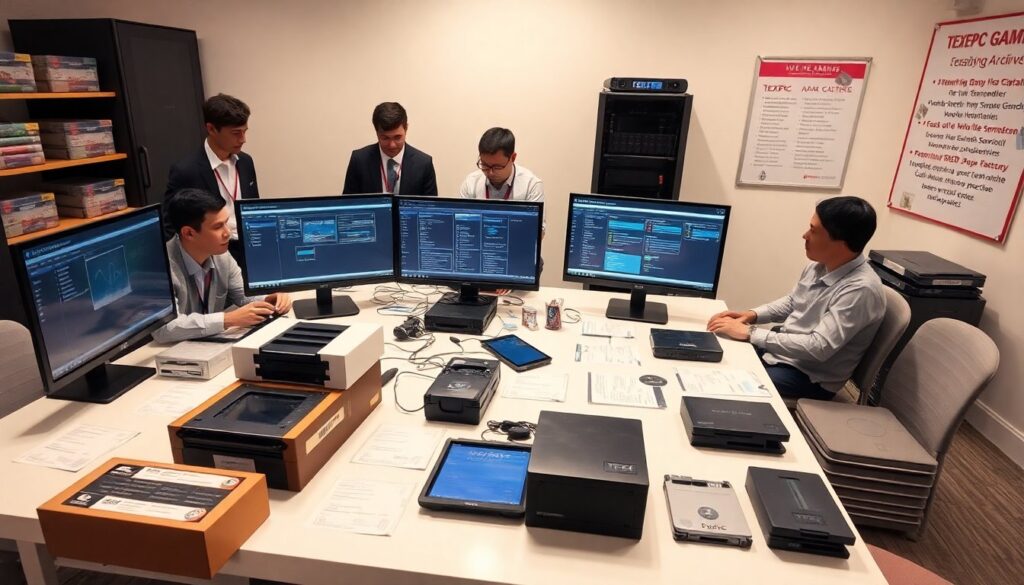
Gaming archives txepc store playable files, screenshots, and event records. The archive team curates hard drives, mod packs, and tournament footage. They verify file integrity and document provenance. The archive uses open formats and clear metadata. The goal is to keep games playable and researchable for future users.
Key Takeaways
- The TxEPC gaming archives preserve playable files, screenshots, and tournament footage to maintain gaming history and culture.
- TxEPC curates and verifies digital and physical game media using open formats and detailed metadata to ensure long-term accessibility.
- Researchers, players, and modders benefit from TxEPC archives for studying design, restoring games, and accessing original assets.
- The archive supports legal and ethical access by balancing rights holders’ interests with free public availability when permitted.
- Users can access, contribute, and interact with the archive through a web portal, secure uploads, community events, and APIs.
- TxEPC relies on donations, volunteers, and partnerships with institutions to continue preserving and expanding the gaming archives.
What TxEPC Gaming Archives Are And Why They Matter
TxEPC gaming archives txepc act as a public library for games and game culture. The archive collects installers, patches, mods, and match recordings. It stores developer notes, magazine scans, and fan translations. The archive preserves code builds and configuration files. The team tags each item with date, platform, and source. Researchers use the archive to study game design, hardware limits, and community practice. Players use the archive to restore old installs and to run legacy servers. Modders use the archive to find original assets and version history. Esports historians use tournament footage and brackets to trace player careers. The archive helps prevent loss when companies close or formats fade. The archive supports emulation by keeping original media and checksums. The archive supports reproducible research by keeping versioned builds. Contributors and users can cite archived items in papers, articles, and videos. The archive follows legal takedown policies and keeps provenance notes. TxEPC emphasizes access, not profit. The archive offers free downloads when rights allow. The archive balances preservation with respect for creators and rights holders. The archive grows through donations from developers, clubs, and collectors. The archive works with libraries, museums, and universities on joint projects. The archive publishes finding aids and simple catalogs for public use. The archive trains volunteers to manage ingest and metadata. Together, these efforts make gaming history visible and usable.
How TxEPC Collects, Catalogs, And Preserves Game Media
TxEPC staff and volunteers collect items via direct donation, web harvests, and community drives. They accept physical media like cartridges and optical discs. They accept digital uploads and mirrored archives. The intake team verifies donor claims and records chain of custody. They create disk images and file-level copies. They compute cryptographic hashes for every file to ensure integrity. They store originals on cold storage and mirrored SSD arrays. They store derivatives on fast servers for user access. They use open file formats for long-term readability. They convert proprietary files to archival formats when rights allow. They keep original files alongside conversions. They assign persistent identifiers to every item. They record metadata fields such as title, creator, date, platform, and license. They add subject tags for genre, language, and mod type. They link related items, like a mod and its required base game. They track dependencies and runtime instructions. They document known issues and emulator settings. They maintain a changelog for each archived object. They run automated checks to detect bit rot and missing files. They refresh storage copies on scheduled intervals. They keep an operational backup plan and offsite copies. They follow standard metadata schemas and adapt community vocabularies. They collaborate with technical partners to test builds on preserved hardware and emulators. They preserve streaming captures with frame-accurate timestamps for analysis. They store chat logs and match stats to support esports research. They audit access logs and maintain transparency reports. They publish regular reports on collection growth and major acquisitions. They train new staff on ethical handling and legal compliance.
Ways To Access, Contribute To, And Use TxEPC Archives
Users can browse the TxEPC web portal and search the public catalog. They can filter by platform, year, or tag. They can stream some media in the browser. They can download disk images when the archive holds rights or permissions. They can request restricted items for research under supervised access. Contributors can register and donate files through a secure upload form. They can ship physical items for imaging at the archive. Volunteers can join intake teams to help catalog and test files. Developers can donate source code and build scripts to improve reproducibility. Esports groups can deposit tournament footage and score sheets. Academics can request data exports or bulk access for study. The archive offers APIs for metadata queries and for integration with research tools. Researchers can cite persistent identifiers in papers. Creators can request takedown or add license information to their items. The archive staff responds to rights requests and mediates conflicts. Users can remix items that carry permissive licenses. The archive encourages clear license tagging to make reuse simple. The archive hosts regular community drives and record days to gather oral histories and team assets. The archive runs workshops to teach safe preservation methods for collectors. The archive runs testbeds where preserved games run under emulators for public demo. The archive lists recommended emulator settings and controller maps for each title. The archive publishes guides on legal best practices and on how to prepare a donation package. Users can sign up for newsletters to learn about new additions and projects. They can follow the archive on social channels to join community calls and volunteer events. The archive relies on donations and memberships to fund hardware and staff. Supporters can give money, time, or material items to keep the archive alive.
About The Author