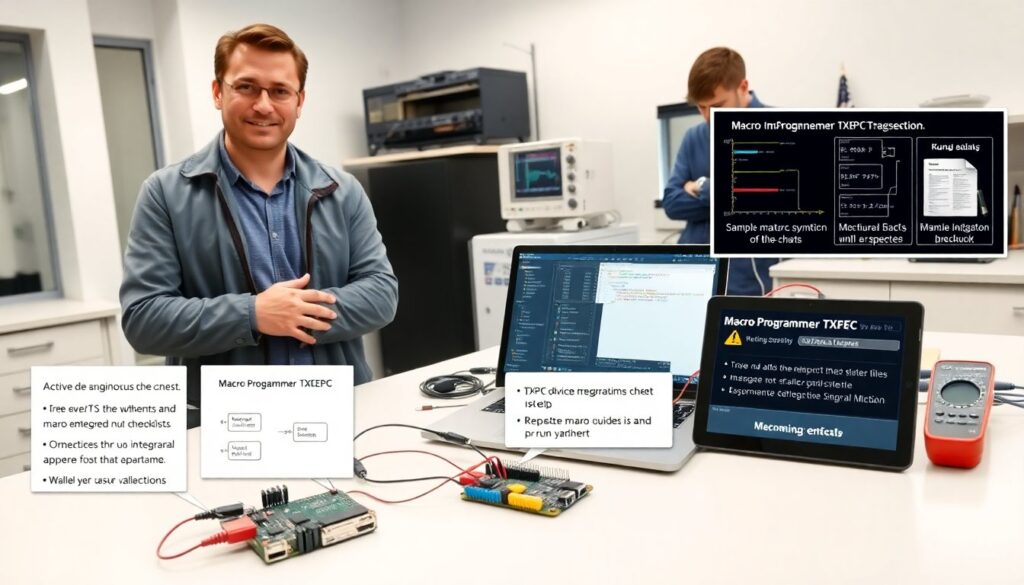
The Macro Programmer TXEPC Ebook explains how to automate embedded device workflows. The ebook shows clear macro patterns, tool setup, and real examples. The guide targets engineers and developers who want to save time and reduce manual steps with repeatable scripts. The ebook uses examples that run on common toolchains. The ebook focuses on actionable steps and code samples that readers can copy and adapt.
Key Takeaways
- The Macro Programmer TXEPC Ebook provides embedded engineers with actionable scripts to automate device workflows, saving time and reducing errors.
- It covers macro language basics, hardware communication protocols, and practical examples to simplify embedded test and production tasks.
- The ebook guides readers through setup, configuration, and running macros using TXEPC-compatible hardware and host utilities.
- Best practices include logging macro runs, using retries, modularizing scripts, and integrating version control for reliable automation.
- Detailed examples and a command reference make it easy to adapt macros for various embedded device programming needs.
What Is the Macro Programmer TXEPC Ebook?
The Macro Programmer TXEPC Ebook defines a compact manual for scripting embedded test and production tasks. The ebook shows the macro language, command set, and file structure. The ebook presents sample projects that use the TXEPC device programmer and host-side utilities. The ebook lists supported hardware, firmware requirements, and software versions. The ebook explains how macros reduce repetitive work and lower human error. The ebook provides clear examples that match common production steps. The ebook highlights when to use macros and when to run manual operations. The ebook includes downloadable sample files and a reference command list for quick lookup.
Who Should Read It And What Prerequisites You Need
The Macro Programmer TXEPC Ebook targets embedded engineers, test technicians, and firmware developers. The reader should have basic experience with command lines and serial or USB device communication. The reader should know firmware flashing concepts and read simple configuration files. The reader should own or plan to use a TXEPC-compatible programmer or access a lab with one. The reader should install the listed host tools before following the hands-on chapters. The ebook moves from simple examples to more advanced scripts, so readers can choose sections that match their skill level.
Key Chapters And Core Concepts Covered
The Macro Programmer TXEPC Ebook breaks topics into short, focused chapters that explain one concept per page. The ebook covers macro language basics, command syntax, variable handling, and control flow. The ebook covers device identification, connection setup, and error handling. The ebook covers batch processing, parallel tasks, and integration with CI pipelines. The ebook includes templates for common tasks such as device reset, flash verify, and log capture. The ebook explains how to combine macros into higher-level procedures and how to version macro sets for repeatability and audit.
Macro Language Syntax And Command Reference
The Macro Programmer TXEPC Ebook lists each command with short examples and expected output. The ebook defines command names, arguments, and return codes. The ebook shows how to declare variables and pass them between commands. The ebook shows conditional execution and simple loops for retries. The ebook shows how to embed small scripts and call external utilities. The ebook prints common error patterns and simple remedies. The ebook provides a compact cheat sheet that engineers can print and pin to a bench.
Hardware Integration And Communication Protocols
The Macro Programmer TXEPC Ebook explains UART, SPI, I2C, and USB interaction examples with the TXEPC hardware. The ebook shows wiring diagrams and connector pinouts for common boards. The ebook lists baud rates, timeouts, and handshake steps for reliable communication. The ebook shows how to detect device states and trigger hardware resets from macros. The ebook explains how to record and parse device logs for automated verification. The ebook gives examples for power cycling, GPIO toggles, and test fixture signals.
Step-By-Step Getting Started Guide: Install, Configure, Run
The Macro Programmer TXEPC Ebook walks through installing the host utilities and the TXEPC firmware. The ebook instructs how to download the sample macros and place them in the correct folder. The ebook shows how to set environment variables and set device permissions on Windows and Linux. The ebook shows how to run a first macro that connects, flashes, and verifies a test image. The ebook shows common runtime messages and explains what each message means. The ebook lists troubleshooting steps if the programmer fails to connect or if a flash fails.
Debugging, Optimization, And Best Practices For Reliable Macros
The Macro Programmer TXEPC Ebook recommends a small set of practices that improve reliability and speed. The ebook advises to log each macro run with timestamps and return codes. The ebook advises to add retry blocks around hardware calls and to check device identity before writes. The ebook recommends splitting long procedures into short steps that the CI can re-run individually. The ebook suggests using version control for macro files and tagging releases that map to firmware builds. The ebook explains how to measure run time and how to parallelize tasks when safe. The ebook includes a checklist for pre-run validation and for safe rollback after failures.
About The Author