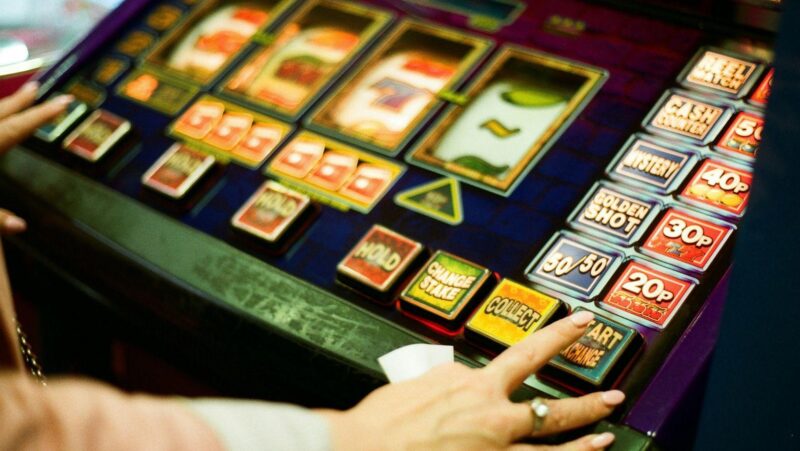
Instant win casino games now account for over 40 percent of digital gaming revenue globally, drawing millions of players who want fast results without spending hours at tables. Global market players like DraftKings, FanDuel and BetMGM have surged into this space. These games pack fast entertainment and potential rewards through streamlined gameplay mechanics.
Understanding Instant Win Games and Their Mechanics
Lucky Hills Australia and other platforms have brought these games into the mainstream by making them accessible through simple interfaces. Instant win games differ fundamentally from traditional slots or table games — through their speed and transparency.
Instant win games are digital products where players receive results within seconds of placing their bet. The games use random number generators to determine outcomes, ensuring each round is independent from others. Players select their bet amount, confirm their choice and receive immediate results showing whether they won or lost.
These games operate differently from prolonged casino experiences. A traditional slot game session might last 30 minutes with multiple spins. An instant win game crashes complete results in under five seconds. The mathematical foundation remains similar — casinos maintain a house edge — but the speed creates a different player experience.
Core Strategies for Better Play Results
Bankroll Management Creates Your Foundation
Bankroll management is the first step before playing any game. This means setting a total amount of money you can spend on gaming without affecting your regular finances. Players should decide this amount while sober and thinking clearly about their budget.
Here’s how effective bankroll division works:
- Set your total monthly gaming budget – use only disposable income you can afford to lose
- Divide this amount into session budgets – typically 10 to 15 percent of total budget per session
- Further divide session budgets into bet sizes – usually 1 to 5 percent per individual bet
- Never exceed these predetermined limits regardless of winning or losing streaks
- Keep records of your spending to track patterns and adjust future sessions
Players who follow strict bankroll rules report more sustainable gaming experiences. Global market players at PokerStars and 888Casino emphasize this discipline. The discipline prevents quick capital depletion and extends entertainment value throughout the month.
Game Selection Based on House Edge Advantages
Not all instant games pack identical odds. The house edge varies significantly between different game types and choosing games with lower house edges directly improves your long-term outcomes.
Here’s a comparison of typical house edges across common instant win games:
| Game Type | Typical House Edge | What This Means |
| Blackjack | 0.5 to 1 percent | Most player-friendly option with proper strategy |
| Video Poker | 0.5 to 2 percent | Depends heavily on game variant and player skill |
| Baccarat | 1.06 to 1.24 percent | Simple betting with consistent odds |
| Instant Scratch Cards | 5 to 15 percent | Simpler gameplay means higher casino advantage |
| Roulette | 2.7 to 5.26 percent | Depends on wheel type – European is better than American |
A player betting 100 dollars at 1 percent house edge loses an expected 1 dollar over time. The same 100 dollars at 10 percent house edge results in an expected 10 dollar loss. Global market leaders like Caesars and Betsson confirm this reality. Choosing lower house edge games mathematically favors players over extended play.
Understanding Odds and Expected Value
Expected value is a mathematical concept showing what a player should expect to lose or win on average per bet. Understanding this principle changes how people approach gaming.
If a game crashes 55 percent winning outcomes and 45 percent losing outcomes, this seems player-friendly. However, if wins return 0.90 dollars per dollar bet and losses cost 1 dollar, players still lose money mathematically. The calculation becomes: (0.55 × 0.90) minus (0.45 × 1.00) equals negative 0.055 per dollar wagered.
This explains why casino games always favor the house eventually. Players can win individual sessions through luck — but mathematical advantages ensure casinos roar ahead over time.
Emotional Control and Decision Making
Emotion represents the biggest threat to successful gaming strategy. Players who let feelings guide decisions typically lose more money than those making calculated choices. Global market platforms emphasize this repeatedly.
Common emotional mistakes include:
- Chasing losses – increasing bets to recover lost money quickly
- Overconfidence – raising bet sizes after winning streaks
- Desperation – playing longer or faster when frustrated
- Excitement – abandoning planned strategies during lucky moments
- Exhaustion – making poor choices after extended play sessions
Players maintaining emotional discipline stick to predetermined bet sizes and walking away points regardless of current emotions. That’s the hot streak killer.
Establishing Clear Quit Strategies
A quit strategy means deciding in advance when to stop playing. This includes both win goals and loss limits — no exceptions.
Setting a win goal means deciding how much profit would satisfy you. Many players establish a target like 50 dollars profit, then quit once reaching it. Loss limits work similarly – decide how much you’ll lose before stopping. A 100-dollar loss limit means leaving when you’ve lost that amount.
Writing these goals on paper before playing creates accountability. People follow written commitments more consistently than mental notes.
Advanced Considerations for Serious Players
Reality of Betting Systems
Betting systems promise to overcome house edges through strategic bet sizing. The Martingale system doubles bets after losses. The Fibonacci system increases bets following specific mathematical sequences. These systems cannot change mathematical reality.
A house edge exists regardless of betting patterns. No system can make a negative expected value game profitable. Global market operators confirm this — some systems may help manage bankrolls more efficiently within the constraints of mathematical disadvantage.
Game Rules and Optimal Strategy
Skill-based games like blackjack and video poker reward players who learn optimal strategies. Basic blackjack strategy involves memorized decisions for every possible hand combination, reducing house edge to approximately 0.5 percent when played perfectly.
Games of pure chance like roulette or scratch cards cannot be improved through learning. The house edge remains fixed regardless of player knowledge. That’s the tilt trap.
Practical Implementation
Successful instant gaming combines multiple strategies working together. Set your bankroll first. Choose games with lower house edges. Calculate expected values before playing. Control emotions by following predetermined decisions. Establish quit strategies before the session starts. Global market players who implement all these see better results.
These approaches won’t guarantee profits because house advantages always exist mathematically. What they do provide is controlled entertainment with reduced financial risk and extended playing duration.
About The Author