Security operations centers have hit a breaking point. Alert volumes that once numbered in the thousands per day now stretch into the tens of thousands at large enterprises, and the analysts responsible for triaging them are stretched thinner every year. Burnout, high turnover, and a persistent talent shortage have made it clear that adding more headcount is not a sustainable answer.
The role of AI in cybersecurity operations is transforming the way modern Security Operations Centers (SOCs) function. Artificial intelligence has stepped into this gap, fundamentally changing what a SOC looks like day-to-day. It helps security leaders separate genuine transformation from vendor hype while providing a clearer picture of where human expertise still matters most.
The Traditional SOC Model Is Straining Under Its Own Weight
For years, SOCs operated on a three-tier analyst structure. Tier 1 analysts monitored dashboards and triaged incoming alerts, often described as an “eyes-on-glass” job focused on catching signals buried in noise. Tier 2 analysts investigated suspicious alerts, taking remediation action or coordinating with IT teams when something genuinely malicious was found. Tier 3 analysts, the most senior members of the team, focused on proactive threat hunting, forensic investigations, and the development of better detection logic.
This structure worked reasonably well when alert volumes were manageable. It does not scale gracefully as attack surfaces expand across cloud, SaaS, and hybrid environments, and as adversaries use automation and AI to accelerate their operations. The result is a widening gap between the volume of security signals generated and the capacity of human teams to review them.
Where AI Is Already Making a Difference
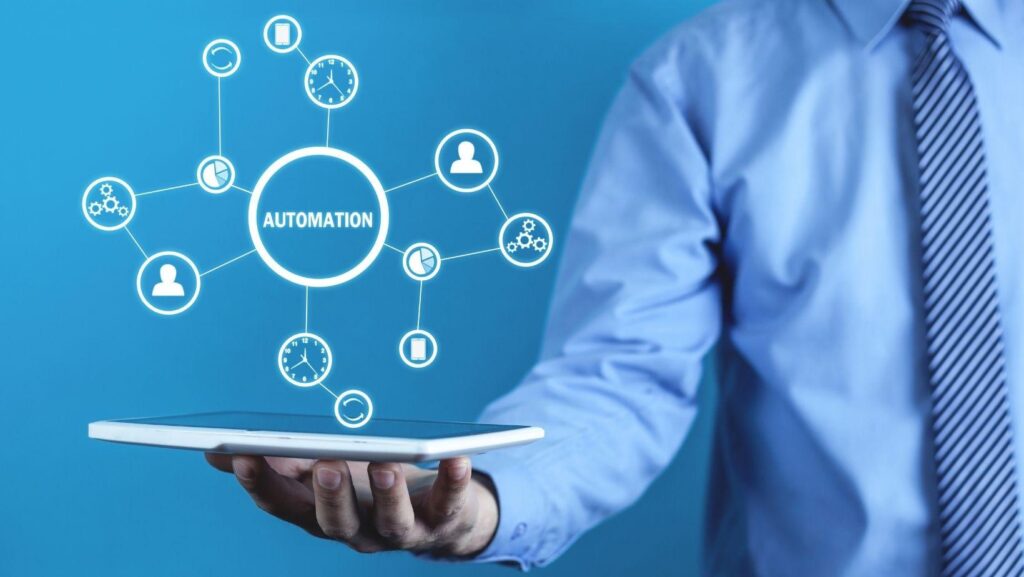
The most mature application of AI in the SOC today centers on alert triage and initial investigation, tasks that traditionally consumed enormous amounts of Tier 1 analyst time. AI agents can pull data from disparate tools, enrich a flagged event with context, build a timeline of related activity, and produce a confidence score indicating how likely the alert is to represent a genuine threat.
This automated enrichment process does not just save time. It also brings a level of consistency that manual triage often lacks, since human analysts working under pressure can apply judgment inconsistently from one alert to the next. AI-driven systems that expose their reasoning step by step give analysts a transparent, auditable trail to review and verify, rather than a black-box verdict they simply have to trust.
New Roles Emerging Inside the AI-Augmented SOC
Rather than eliminating jobs outright, this shift is reshaping what security operations talent actually does day to day. AI-SOC emerging career roles are beginning to take clearer shape as organizations move past pilot projects into production deployments. Security data engineers are increasingly needed to build the unified data pipelines that AI agents depend on, since these systems can only perform as well as the data feeding them. Orchestrators are emerging to manage multi-agent systems, defining which tasks agents can handle autonomously and which still require a human in the loop.
Threat hunters are also evolving in this environment. Rather than manually sifting through logs for anomalies, AI-augmented hunters increasingly rely on agents to handle repetitive groundwork while focusing their own expertise on identifying sophisticated, multi-stage attack patterns that automated systems are more likely to miss.
Agentic Triage and the Shift Toward Autonomous Investigation
One of the more significant recent developments in this space involves agentic AI systems capable of conducting full investigations rather than simply flagging alerts for a human to review. These systems consolidate signals across an environment, apply structured investigative logic modeled on expert playbooks, and deliver a complete, evidence-backed verdict that an analyst can inspect rather than take on faith.
Agentic AI SOC triage capabilities illustrate how far this technology has progressed, moving well beyond basic alert scoring toward genuinely autonomous investigation of the highest-risk entities in an environment. The emphasis on transparency in these systems, showing every step of the investigative process rather than hiding the reasoning behind a black box, reflects a growing recognition that trust and explainability matter as much as raw speed.
Why Human Oversight Still Matters
Despite these advances, few serious practitioners argue that AI should operate entirely without human oversight in the SOC. Escalation decisions involving business-critical systems still depend on organizational context that current AI systems do not reliably carry. Final verdicts on high-impact incidents remain human-reviewed in most mature deployments, not because AI is frequently wrong, but because the cost of an incorrect autonomous decision on a serious incident is asymmetric and difficult to reverse.
This human-in-the-loop principle extends to detection engineering as well. Determining whether a detection rule has become outdated or whether the underlying environment has simply changed requires a kind of contextual judgment that current AI models are not yet equipped to make reliably on their own.
Building an Effective AI-Augmented SOC
Organizations looking to modernize their security operations should resist the temptation to treat AI adoption as an all-or-nothing transformation. A more effective approach starts by identifying the specific pipeline stages, such as alert enrichment, where automation delivers clear value with manageable risk, while keeping higher-stakes decisions under human review until trust in the system has been established through real-world performance.
Investing in the underlying data infrastructure that AI systems depend on is equally important. Fragmented, poorly normalized data across disparate tools limits what any AI system can meaningfully contribute, regardless of how sophisticated its reasoning capabilities might be.
Looking Ahead
AI is not replacing the SOC analyst, but it is fundamentally reshaping what that role looks like. Routine triage and enrichment work is increasingly automated, freeing skilled professionals to focus on the judgment-intensive work that machines cannot yet replicate: complex threat hunting, detection engineering, and overseeing the AI systems themselves. Organizations that approach this transition deliberately, building trust in automated systems gradually while investing in the human skills that remain essential, will be best positioned to keep pace with a threat landscape that shows no signs of slowing down.
Frequently Asked Questions
Will AI eliminate the need for SOC analysts entirely?
No. While AI automates significant portions of alert triage and investigation, human judgment remains essential for high-stakes decisions, complex threat hunting, and overseeing AI systems themselves. Analyst roles are evolving rather than disappearing.
How quickly can an organization implement AI in its SOC?
This varies significantly based on existing data infrastructure and organizational readiness. Many organizations start with narrow, well-defined use cases like alert enrichment before expanding into more autonomous investigation capabilities.
Does AI-driven SOC automation reduce the need for skilled security staff?
Not necessarily. While AI reduces repetitive workload, it often increases demand for specialized skills in areas like AI system oversight, data engineering, and advanced threat hunting that require deeper expertise than traditional Tier 1 analyst work.
About The Author