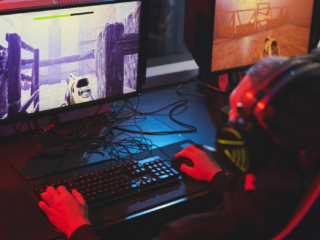
When a player logs in to Fortnite in the middle of the night or hangs out in a Discord voice chat after work, they’re not merely in search of entertainment whilst stepping into a social environment. What was once a lone activity is now one of the world’s largest virtual hangouts.
The player today doesn’t merely play, they get a sense of belonging.
A Global Shift in Play
Ten years ago, gaming was a low-key activity. Friends gathered around a television, swapping controllers and strategies. Today, these same experiences happen across continents, driven by broadband, streaming, and social networks rooted in games.
Minecraft, Valorant, and Roblox are just a few examples of games that host tens of millions of active users daily who build cities, share memes, and even celebrate birthdays inside virtual worlds. Game developers no longer just make games, rather, they build communities.
“People don’t come back to a game only because of its mechanics,” says game sociologist Mia Sanchez. “They come back for the people they’ve met there.”
The Psychology of Digital Connection
The attraction isn’t enigmatic. Humans are preprogrammed for cooperation and competition are the same forces that drive social clubs and sports today propel online gaming. The same neural chemistry that is produced when participating in teamwork in the real world is triggered by a timely assist in Overwatch or an all-hours strategy session in League of Legends.
During the pandemic, multiplayer games were lifelines. Single players defaulted to group screens for comfort and camaraderie. Those habits didn’t dissipate during lockdowns but became a second nature. Gaming in 2025 is no longer an escape but a meeting place and a living room-playground-world stage hybrid.
Platforms That Build the New Digital Neighborhood
The social environment around gaming matters as much as the games themselves now. Discord servers are like neighborhood cafés where friends drop in to discuss, joke, or share clips. Twitch streams provide the immediate crowd sensation of being there, where viewers can yell encouragement or share commentary while playing.
Sites with some of the biggest libraries of games, such as online casino platforms have mimicked this model. Their live dealer tables and real-time chat windows replicate the social intensity of multiplayer games, proving that interactivity, not isolation, drives excitement across the digital playground.
Friendship in a Pixelated World
In these online communities, friendships take on an unexpected depth. A 2024 Pew survey found that more than 60% of players have made at least one close online friend. For others, they persist beyond the games themselves.
Players trade life updates between games, witness virtual weddings, and assist each other through real-world tragedies. A raid squad can be friends; a guild can be family. In an age when physical distance has a way of isolating people, gaming communities fill in the social gap.
The Challenges of Constant Connection
However, the online community is not frictionless. The same anonymity that enables openness can enable toxicity. Harassment and gatekeeping are ongoing issues in most popular games.

Studios and platforms are responding with AI-powered moderation tools and even clearer codes of conduct. Culture shift, though, also falls to the players themselves and thousands of small, positive behaviors that set the tone for others to emulate. “Community is a living thing,” Sanchez says. “It has to be tended to.”
The Next Phase of Social Play
As technology pushes forward, the boundary between “game” and “network” is vanishing. Virtual reality now lets players meet face-to-face in immersive worlds, while artificial intelligence personalizes social experiences on the fly. Some developers are experimenting with emotional-recognition systems that let avatars respond to tone of voice or facial expression.
The result is a form of entertainment that feels less like consuming media and more like existing digitally alongside one another. Players aren’t just along for the ride anymore, they’re residents of fluid online communities.
More Than Just a Game
The story of modern gaming isn’t about graphics or frame rates; it’s about connection. It’s about how people use technology to feel less alone.
Whether it’s a 15-year-old streaming to three friends or thousands cheering on a championship match, every moment of shared play reaffirms a simple truth: the future of gaming, and perhaps entertainment itself — belongs to communities.
And as the worlds we play in keep expanding, the friendships formed inside them may prove to be gaming’s greatest achievement.
About The Author